
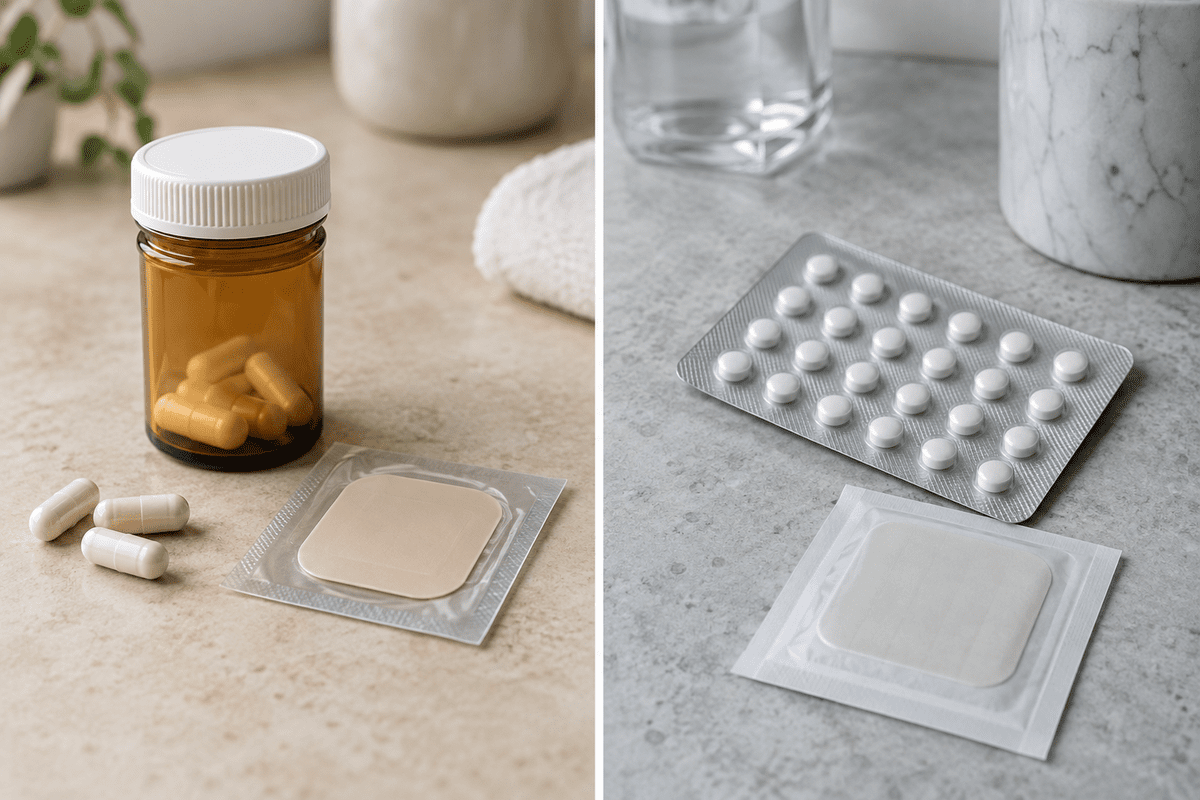
If you have started researching hormone therapy, you have probably run into marketing that positions bioidentical hormones as the “natural” alternative to traditional HRT. So what is the real difference between bioidentical hormones vs traditional HRT, and does it actually matter which one you choose? This guide breaks down how each is made, how they are regulated, and what the research actually supports, so you can have a more informed conversation with your provider. For the fuller picture on HRT overall, our complete guide to HRT for women covers types, safety, and what to expect.
The core difference between bioidentical hormones vs traditional HRT comes down to molecular structure. Bioidentical hormones are chemically identical to the hormones your body naturally produces, estrogen and progesterone in their exact natural form. Traditional HRT can use hormones that are structurally similar but not molecularly identical, including certain synthetic formulations or hormones derived from other sources.
This distinction sounds significant, and marketing for bioidentical hormones often leans heavily on the word “natural” to suggest they are inherently safer. The reality is more nuanced. Many FDA-approved traditional HRT products actually contain bioidentical estrogen and progesterone already, which surprises a lot of women researching this topic for the first time.
Bioidentical hormones are typically derived from plant sources, most commonly soy or wild yam, and processed in a lab to match the exact molecular structure of human estrogen and progesterone. They can be prescribed in two very different ways: as FDA-approved, commercially manufactured products, or as custom-compounded formulations mixed by a compounding pharmacy based on an individual prescription.
This is where a lot of confusion comes in. “Bioidentical” describes the molecular structure of the hormone itself, not whether the product went through FDA approval. A compounded bioidentical cream and an FDA-approved bioidentical patch can both be bioidentical, while going through completely different manufacturing and regulatory processes.
Traditional HRT products are FDA-approved and manufactured under standardized conditions, with consistent dosing verified through clinical trials. Some traditional HRT formulations use bioidentical estrogen and progesterone, while others use synthetic progestins or conjugated estrogens derived from other sources.
Because traditional HRT products go through FDA approval, each batch is tested for consistent potency and purity. This is a meaningful practical difference from compounded formulations, where dosing can vary more from batch to batch since compounding pharmacies are not subject to the same manufacturing oversight as FDA-approved drug makers.
This is the distinction that actually matters most, more than the “bioidentical vs. traditional” framing itself.
Compounded formulations are not inherently unsafe, and many women use them successfully under proper monitoring. But the lack of FDA oversight means the burden of verifying quality and consistency falls more heavily on your specific pharmacy and provider.
According to the Office on Women’s Health, menopausal hormone therapy replaces hormones no longer produced by the ovaries with estrogen, or estrogen combined with progesterone, and this applies to both bioidentical and traditional formulations that are properly prescribed and monitored. The safety profile depends more on the type of hormone, the dose, and how it is monitored than on whether it is labeled “bioidentical.”
According to the U.S. Department of Health and Human Services, the FDA has moved to remove outdated “black box” warnings from menopausal hormone therapy products, reflecting a broader shift toward individualized, evidence-based guidance. This shift applies to FDA-approved formulations, bioidentical and traditional alike, underscoring that regulatory approval and proper monitoring matter more than the “bioidentical” label on its own.
A few questions can help clarify which path makes more sense for your situation:
Not inherently. Safety depends more on the specific hormone, dose, and monitoring than on whether a product is labeled bioidentical. Many traditional HRT products already contain bioidentical hormones.
No. Compounded formulations are custom-mixed by a pharmacy based on a prescription and are not FDA-approved as a finished product, meaning dosing consistency is less standardized than commercial options.
Many providers prefer FDA-approved options because of the consistent dosing, quality testing, and clinical trial data behind them, which compounded formulations do not have to the same degree.
Yes. Many FDA-approved HRT products are already bioidentical, so you do not necessarily need a compounded formulation to use bioidentical hormones. Your provider can walk you through the options available to you.
Coverage varies. FDA-approved bioidentical products are often covered similarly to other HRT formulations, while compounded formulations are less consistently covered by insurance.
Understanding bioidentical hormones vs traditional HRT comes down to looking past the marketing language and focusing on what actually matters: FDA approval status, dosing consistency, and proper monitoring. Both approaches can be effective when prescribed and managed correctly.
If you are curious how these benefits could apply to your specific symptoms, our breakdown of the benefits of HRT for women is a helpful next read.
If you are in the Brunswick, OH area, you can learn more about getting started with HRT in Brunswick, OH and schedule an evaluation built around your actual labs and goals.
A provider at Infinity Wellness can walk you through the actual differences between your options and help you choose a formulation based on your labs and symptoms, not marketing claims.
The information in this article is for educational purposes only and does not constitute medical advice, diagnosis, or treatment recommendations. Individual results vary based on health history and provider evaluation. All decisions regarding HRT should be made in consultation with a licensed medical provider.
A space for feeling and looking your best, inside and out. From weight loss to hormone balance, we blend wellness and aesthetics with a personal touch, right here in Brunswick, Ohio.
Website Designed by IL Webdesign