
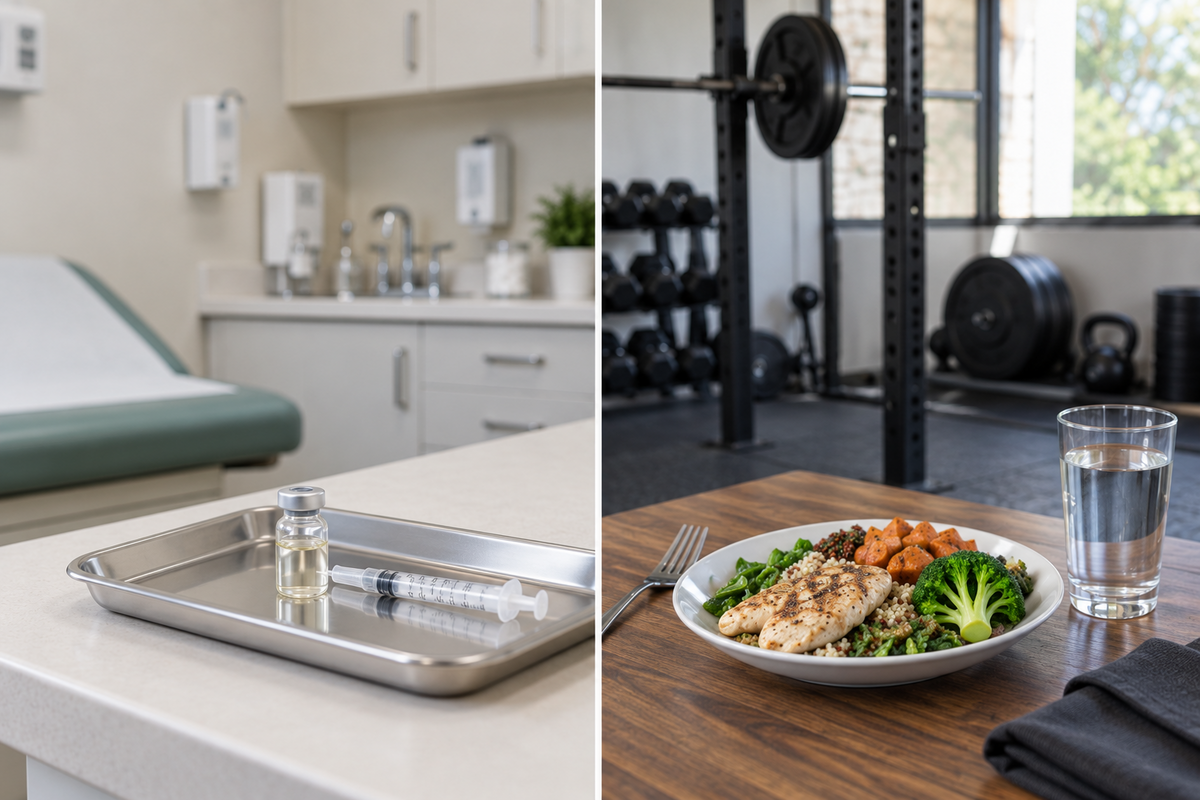
Walk into any supplement aisle or scroll through social media and you will find no shortage of products promising to boost testosterone naturally. So when it comes to TRT vs natural testosterone boosters, which one actually works? The honest answer depends on why your testosterone is low in the first place. This guide breaks down what supplements can realistically do, where they fall short, and when medical treatment becomes the more effective option. For the fuller picture on how TRT itself works, our complete guide to testosterone replacement therapy covers delivery methods, safety, and candidacy in more depth.
The fundamental difference between TRT vs natural testosterone boosters comes down to mechanism. TRT directly replaces the testosterone your body is no longer producing enough of, using a medically dosed, monitored formulation. Natural testosterone boosters, by contrast, are supplements marketed to support your body’s own testosterone production through vitamins, minerals, or herbal extracts, without directly adding hormone to your system.
This distinction matters because it determines what each approach can realistically achieve. TRT can bring a clinically low testosterone level back into a healthy range because it is supplying the hormone itself. A supplement cannot do that in the same way, since it is working around the edges of your body’s natural production rather than replacing what is missing.
Most natural testosterone boosters contain some combination of vitamin D, zinc, magnesium, ashwagandha, fenugreek, or D-aspartic acid. Some of these ingredients do have research behind them, but the results are more modest than marketing claims typically suggest.
The common thread across all of these is modest and inconsistent results, heavily dependent on whether you had an actual nutrient deficiency to begin with.
Natural testosterone boosters run into a hard ceiling: if your testosterone is low because of age-related decline, testicular dysfunction, or a pituitary signaling issue, no amount of vitamin D or herbal extract can meaningfully correct that. Supplements can help close small nutritional gaps, but they cannot generate testosterone your body has stopped producing on its own.
According to the Urology Care Foundation, a testosterone level below 300 nanograms per deciliter is generally considered low, and confirming that number typically requires an actual diagnosis, not a supplement trial. Men who spend months cycling through different testosterone boosters without any bloodwork often end up with the same underlying deficiency, just with less money and more frustration than when they started.
TRT works by directly restoring testosterone to a healthy therapeutic range through a medically dosed formulation, whether that is injections, gel, pellets, or another delivery method. Because dosing is based on actual bloodwork rather than a fixed supplement dose, TRT can be adjusted over time to keep your levels in the range that produces real symptom relief.
According to Mayo Clinic, the benefits of testosterone therapy are clearer for men with a diagnosed medical deficiency than for those with normal, age-related decline, which is exactly why proper testing matters before choosing either path. If your bloodwork confirms a genuine deficiency, TRT has a level of evidence and predictability behind it that no over-the-counter supplement can match. To see roughly how quickly that plays out, our breakdown of how long TRT takes to work walks through a realistic week-by-week timeline.
TRT and healthy lifestyle habits are not competing strategies. Weight loss, resistance training, quality sleep, and stress management all support healthy testosterone levels and can improve how well TRT works once you start treatment. Excess body fat, in particular, can convert testosterone into estrogen, so weight loss alone sometimes raises testosterone modestly even without any other intervention.
The difference is that lifestyle changes are a complement to TRT, not a replacement for it, when a genuine deficiency is present. Men who combine TRT with better sleep, consistent training, and improved nutrition typically see more complete results than TRT or lifestyle changes alone would produce.
A few questions can help clarify where you actually stand:
Not necessarily, if you have an actual nutrient deficiency contributing to low testosterone. But if your levels are clinically low for other reasons, supplements are unlikely to produce meaningful improvement on their own.
You can, but it is worth getting bloodwork first so you know whether you are dealing with a mild, correctable issue or a clinical deficiency that supplements will not resolve.
For men with a confirmed medical deficiency, yes. TRT directly restores testosterone to a healthy range, while supplements can only support your body's own production, which has real limits.
No. Many men combine TRT with healthy lifestyle habits, including proper nutrition, for the most complete results, rather than treating the two as mutually exclusive options.
Supplements that work by correcting a nutrient deficiency, like vitamin D or zinc, only produce noticeable results in men who were actually deficient in that nutrient to begin with.
Comparing TRT vs natural testosterone boosters ultimately comes down to knowing what is actually causing your symptoms. A supplement trial without bloodwork is a guess. An actual evaluation gives you a real answer.
If you are in the Brunswick, OH area, you can learn more about getting started with TRT in Brunswick, OH and schedule an evaluation built around your actual labs rather than trial and error.
A provider at Infinity Wellness can confirm whether your testosterone is genuinely low and help you understand whether TRT, lifestyle changes, or a combination makes the most sense for your specific situation.
The information in this article is for educational purposes only and does not constitute medical advice, diagnosis, or treatment recommendations. Individual results vary based on health history and provider evaluation. All decisions regarding TRT or supplement use should be made in consultation with a licensed medical provider.
A space for feeling and looking your best, inside and out. From weight loss to hormone balance, we blend wellness and aesthetics with a personal touch, right here in Brunswick, Ohio.
Website Designed by IL Webdesign